
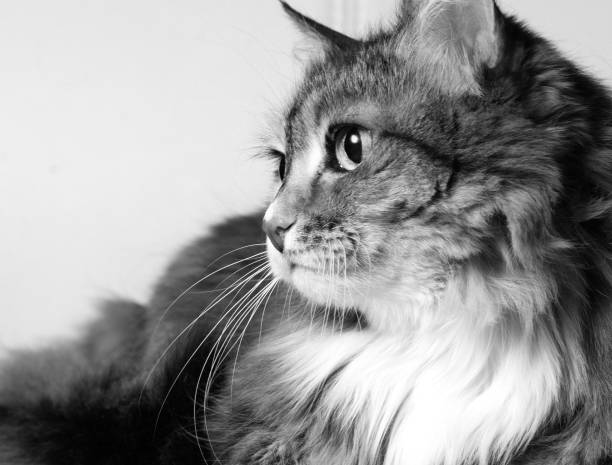
Today I want to write about Philosophy from a lighter yet beneficial perspective. I am an animal lover and quite often feel despite the fact they are not human, they often can teach us the most about humanity. I will not romanticize every aspect of nature and the animal kingdom, for that, would be naïve; after all, nature on its own can be quite cruel–without meaning to be so–it is just how life unfolds. At times, it is good to look at the lighter side of things; otherwise, we would succumb to sarcasm, callousness or depression, but it is never good to deny reality as is.
I used to go through animal shelters and adopt animals who had been there a long time and whose chances of being adopted were pretty close to null; it wasn’t charity, it was a symbiotic relationship– I provided them a comfortable home and shower them with love, in return they provided me with a sense of family and unconditional love–something I rarely experienced before. It was an honor to care for them until their last days; through it, I learned to understand the complexities of their behavior. I often hear people say “They are just animals…led only by instinct”–I don’t think they realize that in saying so, they are indirectly admitting the sad fact, that we as human beings still have a long way to go in learning how to balance ourselves and the world. After all, animals rarely inflict the type of sadistic pain we often find within our human society; the majority of the time, they use violence only to eat or to prevent themselves from being eaten.
I believe that sometimes things happen for a specific reason…the other day as I took my dog for a long walk, I came across an elderly gentleman who had a box of books in his front yard. As I perused through them, I came across a book by John Gray “Feline Philosophy: Cats and the Meaning of Life”–being the owner of two strong character felines, the book rose my curiosity…that book is the foundation for this piece.
Since time immemorial, human beings have lived fascinated by how cats exist. Cats rarely do anything that does not serve a specific purpose or provide them with pure pleasure. Their way of being in the world is one of being contemplative, easygoing but also stubborn, realistic, and practical; quite a contrast with our human foolishness… always in search of unattainable ideals to make us feel “valuable” or “worthy”–cats know they are those things and more and do not need anyone to validate them.
Herodotus, an ancient Greek historian and geographer from the Greek city of Halicarnassus, part of the Persian Empire; described that when an Egyptian house burned in flames, its inhabitants cared more about their cats than their properties. The Egyptians had good reason to wish for cats to accompany them on the journey to the underworld, for felines know only how to live until they are on the very threshold of death–cats do not allow themselves to be subjected to fear of the end: they live in the present and surrender to it with placid intensity-this may seem like a contradiction, but in reality, it is a great lesson about balance. It is no wonder that Egyptians wanted these determined felines to accompany them, for they trusted their furry friends to guide them through the land of the death without any fear….just another adventure. It is then not by chance, that the cult of cats began very early, and it is known that by the fourth century B.C., there was a “temple of the living cat” in the necropolis of Hermopolis.
Aristotle defined that reason has always been the fundamental defining characteristic of humanity–based on his logic, we are “rational animals.” However, it is in failing to understand the distinction between the human soul and the human spirit, and how we are made up of more than just one facet or nature, that has led to one of three things: anxiety over a desire to be holy; in which state, usually people succumb to dogma in order to find momentary peace. Or the idea that one is rebelling by abusing one’s body – uninhibited, wild and free, never meant allowing everyone who so wishes to have access to your physical inner sanctum. It is not about covering from head to toe, for one can be immoral and mean-spirited with or without clothes, with or without religious creed; instead like the masters of the nude paintings of the Renaissance, it is about embracing our physical and sensual natures without shame, but with balance of mind and spirit. Finally, there is the over-praising of the intellect to such a degree that we have declared war on other aspects of our nature–the ancient realization that we need every single aspect in order to transmute the Maya (illusions) we live in, has not hit home yet.
From this obsessive desire to prove that we can be “rational”, rigid fictional cages such as good/evil, love/ hate, justice/injustice, and attachment/detachment have all become the center of our existence and do not let us live in peace. Don’t get me wrong, I am not saying there aren’t things that are black and white; such as the principles of life and rhythm (primordial laws) and actions that violate the free will of others–however, for the most part, everything is perception, yet like mad men we fight against it and try to declare ourselves the only owners of the absolute truth. In such a mad rat race, we are always aspiring to achieve something (usually external) that almost never arrives, or if it arrives, it often disappoints because of the child-like expectations we already hold within our rational minds. The part of self that is the human animal never ceases to aspire to be something it is not, with the frustration that this fact entails–this, of course, doesn’t mean we should not strive to expand, but expansion and a cookie cut version of being someone greater, are totally different concepts.
Cats, on the other hand, do not need rational philosophy or rational thought–their philosophy is their way of life; which is strictly unique to each; cats know very well how to connect with others without ever giving up their individuality. Cats just follow their nature, usually calm but attentive; they are peaceful animals who know how and when to stand for themselves. Meanwhile, humans relentlessly pursue the old Disney World version of happiness, which does not exist–for life isn’t about waiting for someone to rescue us, nor is it about a life full of external pleasures. Cats, on the other hand; while there are no threats around them; spend their time installed in a peaceful tranquility, a state in which they encrypt their present and well-being. Such a state is balanced by moments in which they are active, attentive, filled with energy and intensity–they truly know how to enjoy.
Some reviews of John Gray’s book, state that it teaches people to simply not care about anything and that it only contributes to the problem. In some instances, I would agree; if someone were to read the book without the proper objective, which is balance. It all comes down to each individual, whether or not you seek to balance your life or to escape it. Ultimately, however, we should not dive into philosophical or abstract concepts with fanaticism and the desire to find a formula that takes away our own self-responsibility.
John Gray defends in his book, that perhaps philosophy is nothing more than a symptom of our permanent anxiety to find the truth for the impossible. I could say that both religion and philosophy respond in their own unique ways to calm our theoretical and spiritual nervousness, and should not be used to replace our own ability to think and feel for ourselves–they are guides not laws.
“Far from representing a sign of their inferiority, the absence of abstract reasoning in cats marks their mental freedom.”–Gray further testifies that we humans, praise our intellectual buildings and live subject to linguistic fictions (being, finitude, eternity, etc.). To him, the great human burden is precisely our rational condition. This is where I use my own rationale, just because I agree with a lot of points found within his book, does not mean I am gullible enough to accept every point he makes blindly. I would have to differ, for I feel that in that regard, Mr. gray is speaking from a place of modern spirituality or new-age positivism; which as I have said in the past, has proven to be nothing more than a band-aid–one that is needed for specific moments but which is not the solution. Animals have proven; in their own way; to be masters of the abstract–or as he at times calls them…fictions–they simply don’t succumb to the burdens of it.
Contrary to what is usually thought, humans have not domesticated cats; they simply allowed us into their world and chose to become part of ours. One could in humor say that they have chosen to domesticate us, because thanks to their contact with us, they have stopped depending on hunting to survive, even if they are still born hunters. If they had to abandon their human companions, they would soon resume their natural status as predators. Simply put… we make their lives more comfortable. In contrast to dogs, which we have domesticated, cats interact with us as if we were their equals (or even their inferiors, a kind of subjects who worship and feed them); they may come to love us in their own way, but in the depths of their being they distinguish themselves from us, because they always maintain their independence.
Cats don’t submit to humans because they don’t need leaders. Each specimen on its own, is a born leader: “They neither obey nor venerate the people with whom so many of them currently cohabit. Although they now depend on us, they remain independent of us. If they show us affection, it is not an interested affection. If they don’t enjoy our company, they leave. If they stay, it’s because they want to be with us,”
While humans spend our lives repressing our nature, cats freely and cheerfully follow theirs. On many occasions, cats are despised by some people because they live with an apparent indifference to those who take care of them: we feed and entertain them, and in many cases, we only get from them their enigmatic company. If we “treat them with respect, they give us genuine affection, but they will not succumb if we leave. Without our support they soon become feral again”–although they show little concern for the future, they are quite well equipped to survive it.
Cats never get bored because they do not seek to be amused constantly; they love who they are and don’t seek to escape their own company. If they don’t find stimuli, they have enough with themselves: they groom themselves, contemplate their surroundings, or simply sleep. As Arthur Schopenhauer explained, contrary to cats, humans defend and encrypt our existence in a pendulum that goes from pain to boredom. On the other hand, cats are always content being what they are–being themselves–they don’t need to be like every other cat to be part of the cat community, nor do they care to do so.
On the other hand, human beings are constantly martyred trying to find happiness (which we long for but do not reach, because happiness like every other emotion is exactly that, a momentary feeling, not a state of being–we really need to learn to differentiate contentment from happiness). Fleeing from our own instincts, we label ourselves as sinners and self-flagellate; this on top of letting others judge and condemn us for our gentle sins as if everyone else was except of them. Or on its opposite, we delude ourselves of our so-called sanctitude and look down at everyone else while living in a world full of denial, lies and the cowardice to face our own shadow. Cats, however, don’t care to label themselves one way or the other, instinctively they know they are both, something we as an specie really could benefit in learning.
TIPS CATS COULD GIVE US……THESE TIPS SHOULD BE LOOKED AT, AS A WAY TO BALANCE THE OTHER SIDE LIFE, INSTEAD OF SEEKING TO ESCAPE LIFE….
1 Live in the moment and don’t worry about things that will never happen. Life is not a story, but what happens in that story. You’ll face frustration if you think you can write your life from beginning to end.
2 You don’t have to love and agree with every other human. Learning to be indifferent is also a virtue because you will live with more tranquility, this will organically promote you to be kinder to those around you.
3 Seek pleasure for pleasure’s sake. Sleep if you feel like it. Stroll for the pleasure of strolling. To look for a utility in everything is the principle of slavery.
4 Stop caring what others think of you or worrying about their intentions; better attend to your own ends and serve yourself. They don’t have to like or accept you; you don’t have to care. If their intentions are bad, you have the right and duty to defend yourself.
5 Stop chasing happiness because you may never find it. The important thing is well-being. Don’t spend your life running after chimeras. Today is what matters. Now it is the only possession.
6 Do not pretend to convince any human to be reasonable, for everyone believes themselves to be in possession of the truth and no one will believe they are wrong. Live without getting angry or defeated by the presumptuousness of others.
7 There is no need to find meaning for everything. Things happen, and that’s enough. Whoever seeks to justify everything through creeds and fiction, ends up sticking to them to the point of becoming a slave.
8 Chill, you don’t need to be uptight to be focused. It’s not true that you don’t have enough time, rather, you don’t manage it as you should. When it is time to focus, be totally in that moment, then let it go…you did your best. Always let your moments of relaxation, exceed moments of physical and mental strenuosity.
When humans say our goal is to be happy, we imply that we are unhappy, since we seek what we lack. This constant confusion of contentment with happiness always causes stress and always places happiness within an unattainable mirage–in the future, on the horizon, and we wait for it to be realized at some point. Meanwhile, as Seneca has already pointed out, while anxiety about what never comes breaks through, life escapes us.


 Eiros
Eiros 